
 Landline Number
 pvgcoenashik@
About Department
The Computer Engineering department has 120 students and a branch code 533024510. We focus on providing a well-rounded education with a strong faculty to prepare students for the evolving world. Our goal is not just to teach current knowledge but also to equip students with the skills needed for a changing global landscape.Considering India’s demographic profile, with 550 million individuals under 25, and the projection that one-fourth of the global workforce will be Indian by 2030, we understand the potential impact on both the country and the world. We are committed to playing a role in shaping a better future.To learn more, you can explore our specific programs, initiatives, and projects. We also collaborate with industry partners and engage in research to stay ahead in the ever-changing field of Computer Engineering.
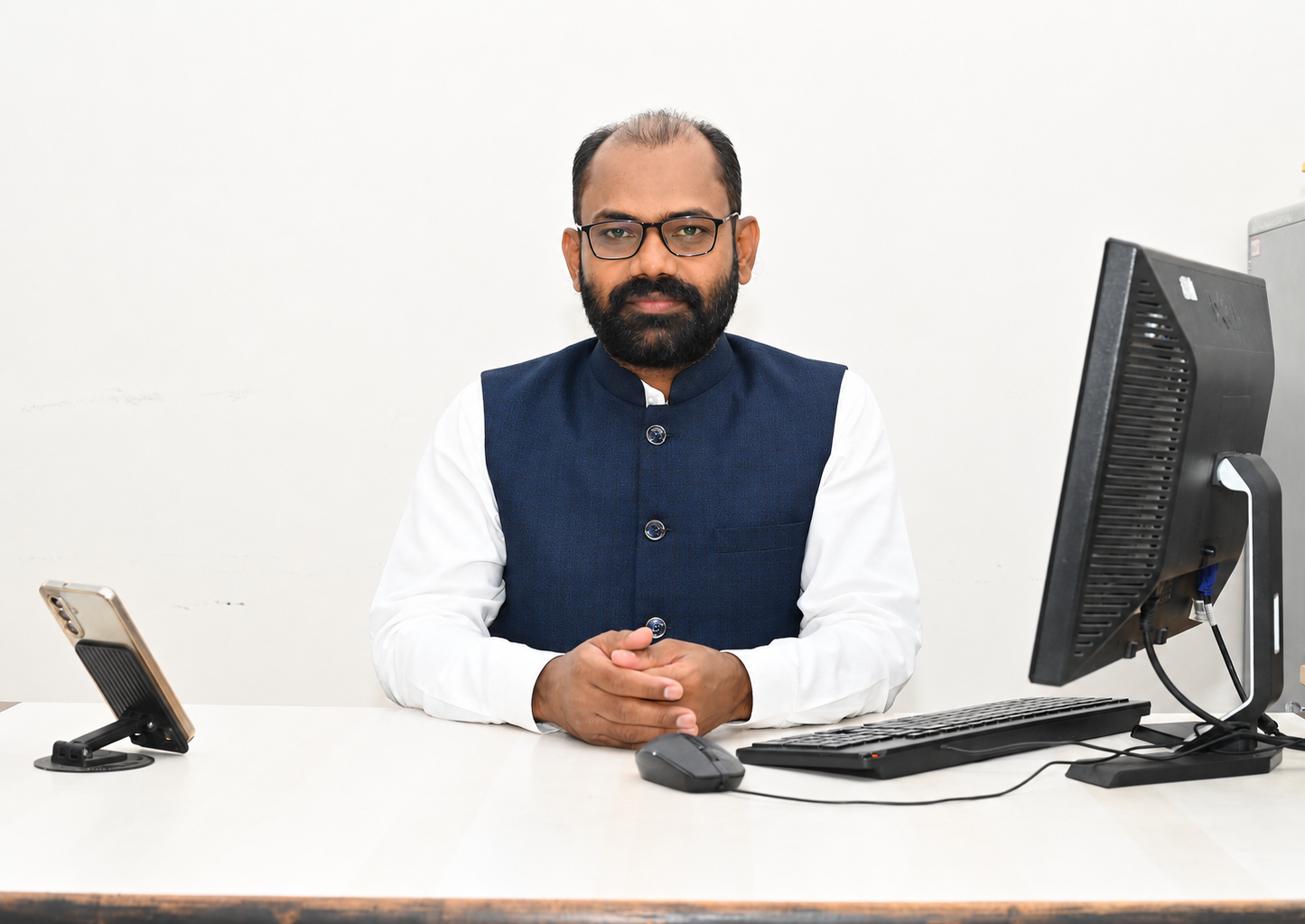
Dr. Vijay R. Sonawane (Head of Department)
Vision
- To develop engineers with adequate knowledge for employability.
Mission
- M1-To provide quality technical education withethical values.
- M2- To promote innovation, entrepreneurship,and higher studies.
- M3- To develop engineers for societal and industrial needs.
Program Outcomes
- PO1: Engineering Knowledge: Apply knowledge of mathematics, natural science, computing, engineering fundamentals and an engineering specialization as specified in WK1 to WK4 respectively to develop to the solution of complex engineering problems.
- PO2: Problem Analysis: Identify, formulate, review research literature and analyze complex engineering problems reaching substantiated conclusions with consideration for sustainable development. (WK1 to WK4)
- PO3: Design/Development of Solutions: Design creative solutions for complex engineering problems and design/develop systems/components/processes to meet identified needs with consideration for the public health and safety, whole-life cost, net zero carbon, culture, society and environment as required. (WK5)
- PO4: Conduct Investigations of Complex Problems: Conduct investigations of complex engineering problems using research-based knowledge including design of experiments, modelling, analysis & interpretation of data to provide valid conclusions.(WK8).
- PO5: Engineering Tool Usage: Create, select and apply appropriate techniques, resources and modern engineering & IT tools, including prediction and modelling recognizing their limitations to solve complex engineering problems. (WK2 and WK6)
- PO6: The Engineer and The World: Analyze and evaluate societal and environmental aspects while solving complex engineering problems for its impact on sustainability with reference to economy, health, safety, legal framework, culture and environment. (WK1, WK5, and WK7).
- PO7: Ethics: Apply ethical principles and commit to professional ethics, human values, diversity and inclusion; adhere to national & international laws. (WK9)
- PO8: Individual and Collaborative Team work: Function effectively as an individual, and as a member or leader in diverse/multi-disciplinary teams.
- PO9: Communication: Communicate effectively and inclusively within the engineering community and society at large, such as being able to comprehend and write effective reports and design documentation, make effective presentations considering cultural,language, and learning differences
- PO10: Project Management and Finance: Apply knowledge and understanding of engineering management principles and economic decision-making and apply these to one’s own work, as a member and leader in a team, and to manage projects and in multidisciplinary environments.
- PO11: Life-Long Learning: Recognize the need for, and have the preparation and ability for i) independent and life-long learning ii) adaptability to new and emerging technologies and iii) critical thinking in the broadest context of technological change. (WK8).
Program Specific Outcomes
- PSO1.Professional Skills-The ability to understand, analyze and develop computer programs in the areas related to algorithms, system software, multimedia, web design, big data analytics, and networking for efficient design of computer-based systems of varying complexities.
- PSO2.Problem-Solving Skills- The ability to apply standard practices and strategies in software project development using open-ended programming environments to deliver a quality product for business success.
- PSO3.Successful Career and Entrepreneurship- The ability to employ modern computer languages, environments, and platforms in creating innovative career paths to be an entrepreneur, and a zest for higher studies.
Program Educational Objectives
- PEO1– Attainment of key principles and practices of computation, mathematics and basic principles of engineering to ensure that graduates are able to apply their software development skills in design and implementation of practical systems consisting of software and/or hardware components.
- PEO2– Analyze real-life problems and impart science-based engineering education to develop professional skills that will prepare the students for immediate employment in the industry.
- PEO3– Imbibe lifelong learning, professional and ethical attitude for embracing global challenges and make positive impact on environment and society.